An event strategy aligned with ESG priorities.
We define the event purpose, audiences, themes, outcomes, and success indicators based on the company’s sustainability objectives.

EN
Turn sustainability strategy into meaningful stakeholder experiences
ESG Events & Experiential helps listed companies design events, exhibitions, workshops, launches, and stakeholder activities that communicate sustainability priorities through direct participation. The service connects ESG strategy, educational content, experience design, accessibility, and measurable engagement so that each event supports a clear business and stakeholder objective.














Effective ESG events should do more than present information or generate attendance. They should help participants understand material sustainability issues, engage with the company’s direction, and contribute to meaningful outcomes. This requires a clear purpose, relevant content, inclusive design, and an experience that reflects the organisation’s sustainability commitments.
Many ESG events rely on broad themes, one-way presentations, and short-term publicity without a clear connection to strategy or measurable impact. Event production may also overlook accessibility, sustainable procurement, waste management, carbon considerations, and stakeholder diversity. These gaps can weaken credibility when the event experience does not reflect the principles being communicated.
Our ESG Events & Experiential service develops each activity from the company’s material topics, stakeholder priorities, and intended outcomes. We support event strategy, programme design, content development, speaker and partner coordination, interactive formats, accessibility planning, sustainable production guidelines, and post-event measurement. This creates experiences that are credible, useful, and consistent with the company’s wider ESG direction.


What will you get from our ESG Events & Experiential service
We define the event purpose, audiences, themes, outcomes, and success indicators based on the company’s sustainability objectives.

We develop presentations, workshops, discussions, exhibitions, and interactive formats that improve understanding and participation.

We consider physical access, digital access, communication formats, language, and usability for different stakeholder groups.

We integrate practical considerations for materials, procurement, energy use, transport, waste, suppliers, and event operations.

We assess learning, participation, stakeholder response, behavioural outcomes, and the event’s contribution to wider ESG objectives.


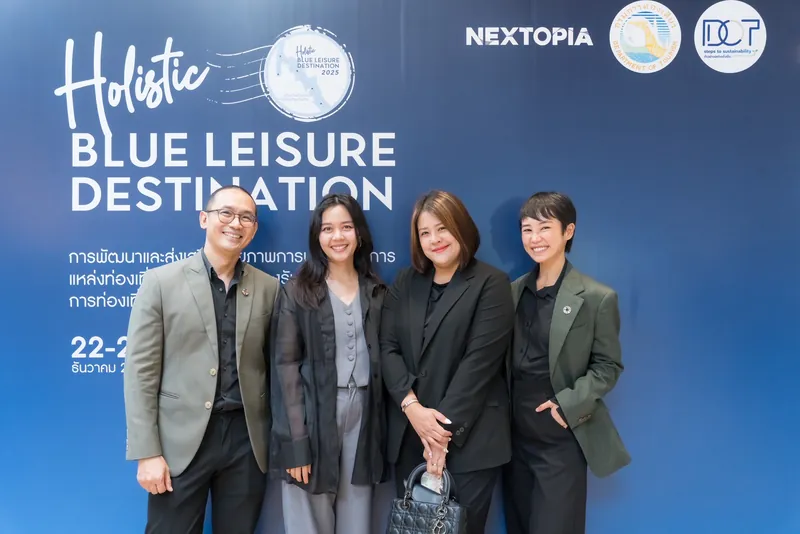
Blue Business Plan Dialogue Forum – 2025
The Department of Tourism has unveiled its "Holistic Blue Leisure Destination" vision alongside the Blue Business Plan Dialogue , laying the foundation for a sustainable future for Thailand's marine tourism industry. On behalf of PRE Sustainable Consultancy , Paspol Sariman and Prangchompoo Koolpruksee were honored to be invited as speakers in the panel discussion titled:…

Designing the Cities of Tomorrow: Sustainability, Technology, and Equity Talk
Highlights from the academic panel discussion, "Designing the Cities of Tomorrow: Sustainability, Technology, and Equity," held as part of Wonder of Well-Living City 2025 (WOW Festival 2025) at the Benjakitti Forest Park Museum Building on 19 January 2025 . The session featured distinguished experts in urban development from the Faculty of Architecture and Planning, Thammasat…

Take our free 10-question ESG Readiness Check to understand your organisation’s current strengths, gaps, and priorities. In just a few minutes, you will gain a clearer view of what to improve and where to begin.
Check Your ESG Readiness





Your FTSE Russell ESG score still isn't where you want it to be. Sound familiar? Here's the good news: you're probably doing more than you think.
”
Your FTSE Russell ESG score still isn't where you want it to be. Sound familiar? Here's the good news: you're probably doing more than you think.
”
Your FTSE Russell ESG score still isn't where you want it to be. Sound familiar? Here's the good news: you're probably doing more than you think.
”

True ESG scopes can be overwhelming and make you feel lost in directions. We are happy to talk with you and help you stay on the right track with no pressure. Contact us below.

The current global warming situation has resulted in the global start of trade measures aimed at sustainability by the United Nations, such as import-export tariffs, international carbon credit trading. Including requiring of company's sustainability activities be reported on the stock exchange. As a result, businesses in the supply chain have to pay more attention to sustainability policies. Therefore, these can increase the opportunity to sell products or services that meet more sustainability needs. Including possibly receiving some tax deductions in the future
ESG reporting is the process of documenting an organization's initiatives and activities that reduce negative impacts and promote sustainability across all aspects of its operations. For publicly listed companies, these reports are submitted annually to the Securities and Exchange Commission (SEC) as part of their regulatory reporting requirements. E (Environment): Initiatives and activities related to environmental protection and sustainability. S (Social): Initiatives that promote social responsibility, employee well-being, community engagement, and stakeholder impact. G (Governance): Initiatives focused on corporate governance, ethics, compliance, transparency, and accountability. These activities are aligned with the United Nations Sustainable Development Goals (SDGs), providing a globally recognized framework for measuring and advancing sustainable development.
SDGs (Sustainable Development Goals) are goals and indicators for sustainable development set by the United Nations. There are 17 main topics and 169 sub-topics covering all sectors for all countries around the world. BCG (Bio, Circular, Green Economy) is a concept about the use of renewable and renewable energy in the economy to maximize the benefits of industry resources usage to produce goods and services. ESG Report is a requirement to report on sustainability activities set by the investment sector.
Thailand is now using the FTSE Russell ESG Score to align with global standards and boost the visibility of Thai companies among international investors. This move helps make ESG assessments more transparent, as the FTSE Russell model uses public information rather than relying on self-reported questionnaires. It reduces the reporting burden for companies while providing investors with consistent, comparable data. By shifting to this global framework, Thailand aims to increase trust, improve investment appeal, and support long-term sustainability goals. The transition will be gradual, with a pilot phase starting in 2024 and full adoption expected by 2026.
Firstly, analyzing the form and production process of products and how your business is, currently Analyze how and where activities within the company meet the sustainability goals using the sustainability goals (SDGs) as a criterion. Select activities or tools that can be adapted or developed to achieve the chosen goal.
The most important thing is to create sustainability for the planet and life. In some countries and industries may benefit from tax measures, such as using carbon credits to reduce import taxs to the EU (CBAM-Carbon Boarder Adjustment Mechanism) for certain export businesses, etc.
When you've studied all the information but still can't figure it out. Feel free to contact us.